• UGM
  • IT Center
  • Library
  • Journal of Psychology
  • LPPM UGM
  • UGM Mail
  • English
    • Bahasa Indonesia
    • English
Universitas Gadjah Mada Center for Indigenous and Cultural Psychology
Fakultas Psikologi, Universitas Gadjah Mada
  • Home
  • Tentang CICP
    • Selayang Pandang Indigenous Psychology
    • Sambutan Direktur CICP
    • Sejarah CICP
    • Visi dan Misi
    • Staff
    • Anggota
  • Kegiatan
    • Konferensi
    • Konsentrasi Penelitian
      • Konsentrasi Penelitian 2021
      • Konsentrasi Penelitian 2020
      • Konsentrasi Penelitian 2019
    • Kegiatan Terlaksana
    • Kegiatan Rutin
      • CICP Publication Workshop
      • School of Researcher
      • THEORY BUILDING TRAINING
    • Kegiatan Mendatang
    • Magang Internal
      • Prosedur Magang Internal (UGM)
      • Rekap Magang Internal 2018
      • Rekap Magang Internal 2019
    • Magang External
      • Prosedur Magang Eksternal (Asing dan Non-UGM)
      • Alumni Magang Eksternal
  • Publikasi
    • Jurnal
    • Working Paper Series
    • Buku
    • Policy Brief CICP
    • Artikel Lain
  • Home
  • Public Release
  • page. 2
Arsip:

Public Release

Symposium Handbook Released

Public Release Wednesday, 10 December 2025

We are pleased to announce that the official Symposium Handbook for the CICP Symposium and Research Dissemination 2025 is now available for download. It includes the full schedule, keynote information, presentation details, room assignments, selected abstracts, and access links for online participation.

Thank you to all presenters and participants for your contribution and enthusiasm toward this year’s symposium. read more

Selected Abstract for Symposium and Research Dissemination “Beyond the Screen: Rethinking Media and Violence”

Public Release Tuesday, 9 December 2025

We are pleased to announce the Selected Abstracts for the Symposium and Research Dissemination themed “Beyond the Screen: Rethinking Media and Violence”

Congratulations to all presenters whose works have been selected. We also extend our deepest appreciation to everyone who submitted their abstracts. Each contribution reflects a strong commitment to advancing critical perspectives on media, violence, and the intricate ways they interact in contemporary society. Your engagement strengthens our shared mission to promote culturally grounded, socially responsive, and academically rigorous dialogue. read more

Interfacing Culture: Multisensory Ethnography in the Digital Era

Public Release Tuesday, 29 July 2025

In the Module 2 Lecture 1 session, Dr. Zamzam delivered a lecture on the multisensory ethnographic approach in the digital era, particularly in anthropological research. Anthropological studies focus on the social construction of the senses, especially sensory perception in the process of socialization, which is not limited to merely physical or bodily perception. These socially constructed sensory perceptions have implications for the affective dimensions of individuals. In this context, the term affect refers to a general category of emotions and sensations that influence how we perceive and act upon the world, and it should be understood within the framework of social action. read more

Interfacing Culture: Multisensory Ethnography in the Digital Era

Public Release Saturday, 26 July 2025

Monday (21/07) — In a thought-provoking session of the 2025 Summer Course “Beyond Boundaries” hosted by CICP, psychology and culture came under fresh light with a lecture by renowned scholar Dr. Muhammad Zamzam Fauzanafi, M.A, delivered a lecture on the multisensory ethnographic approach in the digital era, particularly in anthropological research. Anthropological studies focus on the social construction of the senses, especially sensory perception in the process of socialization, which is not limited to merely physical or bodily perception. These socially constructed sensory perceptions have implications for the affective dimensions of individuals. In this context, the term affect refers to a general category of emotions and sensations that influence how we perceive and act upon the world, and it should be understood within the framework of social action. read more

Rethinking Culture: Summer Course Spotlights Polyculturalism as a Path to Inclusion with Prof. Emiko Kashima

Public Release Friday, 25 July 2025

Friday (18/07)— In a thought-provoking session of the 2025 Summer Course “Beyond Boundaries” hosted by CICP, psychology and culture came under fresh light with a lecture by renowned scholar Prof. Emiko Kashima from La Trobe University. The session, titled “What is Polyculturalism? A New Perspective for Understanding Culture and Cultural Identity”, invited participants to explore how cultures are not fixed but interconnected and ever-evolving. read more
Understanding Indigenous Psychology with Dr. Rogelia Pe-Pua: CICP International Summer Course Series

Public Release Friday, 25 July 2025

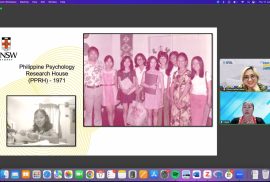
Thursday (17/07), Rogelia Pe-Pua launched the “Beyond Boundaries” International Summer Course with a reflective presentation about “Tracing the Trajectory of Indigenous Psychology: A Reflective Dialogue on Knowledge, Method, and Identity”. This presentation explain the development of Sikolohiyang Pilipino, a homegrown psychology movement pioneered by Virgilio Enriquez. She emphasized cultural identity as a foundation of psychology, stating, “Psychology is too important to be left only to psychologists.” The concept of kapwa—shared identity—was presented as central to Filipino social interaction. read more

A Session with Prof. Jaan Valsiner and Assoc. Prof. Giuseppina Marsico: CICP’s Summer Course Explores the Meaning of Human Experience in Psychology and Culture

Public Release Friday, 25 July 2025

Wednesday (16/07), has been presented the first lecturer session in International Summer Course CICP 2025. This session titled “The Dynamic Nature of Psychological Phenomena: Where Cultural Psychology Solves the Main Problem of General Psychology” by Prof. Jaan Valsiner (Aalborg University) and Assoc. Prof. Giuseppina Marsico (the University of Salerno). Valsiner and Marsico addressed a fundamental shortcoming in mainstream psychology—its neglect of semiosis, the process through which meaning is created and understood in human experience. Marsico delivered a sharp critique of the historical trajectory of psychology, arguing that throughout the 20th century, the discipline failed to recognize meaning-making as a central psychological process, thereby sidelining a crucial dimension of the human mind. read more

Opening of the CICP 2025 Summer Course: Reflecting on 15 Years of Indigenous and Cultural Psychology

Public Release Friday, 25 July 2025

Yogyakarta, 14 July 2025 — The Centre for Indigenous and Cultural Psychology (CICP), Faculty of Psychology, Gadjah Mada University, officially opened the 2025 International Summer Course series themed ‘Beyond Boundaries: Reflection and Forward Looking into Psychology and Culture’. This online event marks the 15th anniversary of CICP’s journey in developing and strengthening indigenous and cultural psychology approaches in Indonesia and the Global South. read more

Pre Event Summer Course, Angkringan #22: Exploring Rasa in Javanese Tradition – A Psychological and Cultural Dialogue

Public Release Thursday, 12 June 2025

Angkringan #22, titled “Rasa in Javanese Tradition: Experience, Psychology, and the Soul,” was held on Wednesday, May 28, 2025, from 14:00 to 16:00 WIB. The event took place in a hybrid format—on-site at Room A-203, Faculty of Psychology UGM, with limited seating for 30 participants, and online via Zoom Meeting. This session was part of the pre-event series for the 2025 Summer Course organized by the Center for Indigenous and Cultural Psychology (CICP). As part of the lead-up to the program “Beyond Boundaries: Towards New Views of Indigenous and Cultural Psychology,” the discussion opened a space to explore local concepts rooted in the psychological traditions of Indonesian communities. read more

CICP Researcher Examines Issues of Social Cohesion among Rohingya Refugees in Aceh

Public Release Monday, 5 May 2025

CICP researchers have successfully secured funding from the UGM International Joint Research Academy (IJRA) under the sub-program International Research Collaboration, part of UGM’s flagship program on Socio-Cultural Resilience of Communities. The research, led by Pradytia Putri Pertiwi, Ph.D., began with a preliminary study titled Vulnerability and Social Cohesion in Shared Spaces: A Cross-Country Analysis of Forcibly Displaced Rohingyas in Bangladesh and Indonesia. This research aligns with the targets of Sustainable Development Goal (SDG) 10: Reduced Inequalities and SDG 16: Peace, Justice, and Strong Institutions. The research was conducted in collaboration with Randy Wirasta Nandyatama, SIP, M.Sc., Ph.D, from the Faculty of Social and Political Sciences UGM, Dr. Marta Mawarpury from the Faculty of Medicine, Syiah Kuala University, Prof. Dennis Dijkzeul, and Dr. Abu Faisal Md. Khaled from the Institute for International Law for Peace and Conflict – IFHV, Ruhr-University Bochum, Germany.

The study aims to address a gap in existing literature by conducting a comparative analysis of vulnerability and social cohesion within the humanitarian system, focusing on Rohingya communities in Indonesia and Bangladesh. It integrates perspectives from psychology, political science, law, and humanitarian studies. Participants in the study include Rohingya refugees, local community members, and institutions involved in refugee management. Data collection methods include direct interviews, observations, and focus group discussions (FGDs).

Dr. Pradytia, along with CICP research assistants Duma Hardiana Manurung and Fadhliah Sofiyana Noor Saprowi, conducted preliminary fieldwork in Aceh. The team visited two temporary shelters in Mina Raya and Kulee, engaging with 33 participants, including Rohingya refugees and local community members. A research workshop was also held in collaboration with Dr. Marta Mawarpury and Yayasan Geutanyoe as research partners.

The preliminary findings highlighted three key themes: (1) Vulnerability among Rohingya refugees, (2) Tensions within institutions managing Rohingya refugees, and (3) Social cohesion within local communities. Planned outputs from this preliminary study include a full research proposal, an educational video, a psychological support module, and a research manuscript.

Please read the full preliminary reports in the following document.

Preliminary report Rohingya in Indonesia 03.12.24.docx-2

Tantangan Berkehidupan di Masyarakat yang Beragam: CICP Visiting Professor 2021

Public Release Friday, 17 December 2021

Jumat pertengahan November lalu (12/11) CICP baru saja menggelar acara yang berjudul CICP International Webinar: Challenges of Living in a Diverse Society. Webinar ini diselenggarakan secara daring via Zoom dengan mengundang 3 narasumber dalam negeri maupun luar negeri. Narasumber tersebut antara lain Prof. Dr. Faturochman, M.A. (Fakultas Psikologi), Dr. Muhammad Najib Azca (Fakultas Ilmu Sosial dan Ilmu Politik) dari Universitas Gadjah Mada serta Rogelia Pe-Pua, Ph.D. narasumber dari School of Social Sciences University of New South Wales. Materi yang dibahas antara lain yaitu “Managing Diversity for Unity” oleh Faturochman, “Lessons Learned from Conflict Resolution in Indonesia” oleh Muhammad Najib Azca, dan materi terakhir dibawakan oleh Rogelia Pe-Pua yang berjudul “Australian Experience of Multiculturalism and Cultural Diversity”. Webinar ini adalah acara rutin CICP dari program umum Visiting Professor yang diadakan setiap tahunnya, tahun lalu CICP mengundang pembicara Luca Tateo Ph.D. dari University of Oslo, Norwegia. Webinar ini disambut dengan baik dan aktif oleh peserta yang berasal dari kalangan mahasiswa S1, S2, S3 dan khalayak umum. [Ratri/Humas CICP] read more

School of Researcher Upgrading 2021 Ajang Pembekalan Kemampuan Riset Asisten Baru CICP

Public Release Friday, 19 November 2021

Oktober ini CICP kembali mengadakan School of Researcher (SOR): Upgrading untuk meningkatkan kemampuan penelitian asisten CICP. Kegiatan ini diadakan sebanyak 5 sesi pada hari Senin, Jumat, dan Sabtu sepanjang tanggal 15 – 23 Oktober 2021. Kegiatan SOR: Upgrading diisi dengan berbagai tema diantaranya materi statistika analisis regresi, mediasi, moderasi; materi terkait penelitian dengan penggunaan data media sosial dasar-dasar python dan content analysis; serta materi penelitian kualitatif yaitu analisis koding tematik data wawancara. Pengisi dalam acara SOR: Upgrading ini antara lain Direktur CICP Haidar Buldan Thontowi, M.A., Ph.D serta para asisten aktif CICP seperti Syurawasti Muhiddin, S.Psi., M.A., Ika Hana Pertiwi, S.Psi., Kinansa Husainy, dan Yanhizbar Rotanza. Acara dilaksanakan dengan sesi penyampaian materi, tanya-jawab, serta praktik penerapan materi yang sudah didapat pada dataset/data riset. Selain itu, pada SOR ini peserta juga mengaplikasikan materi pengolahan data dengan berbagai software yang relevan seperti SPSS, Microsoft Excel, JupyterLab, Google Colab. [Ratri/Humas CICP] read more

Pendidikan, Kebencanaan, Ekonomi: Theory Building Training 2021 (From Theory to Action)

Public Release Thursday, 28 October 2021

Acara rutin CICP Theory Building Training (TBT) telah berhasil terselenggara secara daring September lalu pada Jumat (24/9) dan Sabtu (25/9). TBT kali ini diselenggarakan secara daring melalui Zoom dengan mengusung tema “From Theory to Action”. TBT diselenggarakan selama dua hari penuh yang diisi tiga pembicara yaitu Edilburga Wulan Saptandari M. Psi., Ph.D., Pradytia Putri Pertiwi, S.Psi., Ph. D., dan Rahmat Hidayat, S.Psi., M.Sc., Ph.D. read more

Kaitan Ras dan Etnis dengan Kesehatan Mental: Asisten Peneliti CICP menjadi pembicara webinar di Hari Kesehatan Mental Dunia

Public Release Thursday, 28 October 2021

Pada Minggu (10/10), Junior Researcher CICP Syurawasti Muhiddin, S.Psi., M.A. menjadi pembicara dalam webinar yang diselenggarakan Lingkar Psikologi. Syura mengisi tema berjudul “Stigma dan Ketidaksetaraan Karena Ras dan Etnis terkait dengan Kesehatan Mental”. Webinar ini diselenggarakan melalui Zoom dan disiarkan langsung melalui kanal Youtube. Peserta berasal dari kalangan masyarakat umum yang tertarik dengan isu kesehatan mental dari berbagai daerah di seluruh dunia. Acara ini membahas kaitan perbedaan ras dan etnis yang dapat menjadi tantangan mencapai kesehatan mental. Syura menyampaikan bahwa perbedaan ras dan etnis ini memunculkan stigma yang menghambat seseorang dalam mencari pertolongan profesional. Penolakan dari masyarakat juga menjadi hal yang tidak terelakkan dari adanya stigma buruk pada Orang dengan Gangguan Jiwa (ODGJ). Syura menekankan pentingnya memahami kesehatan mental secara kontekstual. Selain itu, Indigenous Psychology sebagai studi ilmiah bersifat native dengan berbasis ide ilmu ‘dari masyarakat untuk masyarakat’’ mampu membantu menjembatani pemahaman pentingnya konteks dalam menangani isu gangguan mental di masyarakat. Pengetahuan mengenai kebudayaan setempat juga dibutuhkan untuk menanggapi isu kesehatan mental secara lokal. [Ratri/Humas CICP]

Visiting Professor 2020: Mendiskusikan Pandemi Covid-19 dalam Ranah Akademisi

Public Release Monday, 23 November 2020

Center for Indigenous and Cultural Psychology (CICP) telah menyelenggarakan kegiatan Visiting Professor pada 6 November 2020. Kegiatan tersebut merupakan agenda tahunan bagi CICP dengan mendatangkan pembicara dari yang biasanya dikemas dalam serangkaian short course untuk mahasiswa Fakultas Psikologi UGM. Namun, berkaitan dengan adanya pandemi COVID-19, Visiting Professor kali ini diselenggarakan secara webinar melalui aplikasi video conference ZOOM yang terbuka untuk umum dan dilaksanakan secara gratis. Kegiatan ini merupakan rangkaian dies natalis Fakultas Psikologi UGM ke 56. Tema yang diangkat pada Visiting Professor 2020 berjudul “Social Psychology Perspective on Understanding Covid-19”. Pembicara yang hadir pada kegiatan tersebut adalah Prof. Luca Tateo, Ph.D. dari Department of Special Needs Education, University of Oslo, Dr. Wenty Marina Minza, S.Psi., M.A. dari Fakultas Psikologi UGM, dan Prof. Dr. Faturochman, M.A., dari Fakultas Psikologi UGM. Materi yang disampaikan merupakan hasil penelitian kolaborasi dari ketiga pembicara dan penelitian tersebut masih berlangsung. Selain itu, Visiting Professor tahun ini dibuka dengan sambutan yang dberikan oleh Prof. Kwartarini Wahyu Yuniarti, MMedSc., Ph.D sebagai Wakil Dekan Bidang Penelitian, Pengabdian Kepada Masyarakat, dan Kerja Sama dan Haidar Buldan Thontowi S.Psi., M.A., Ph.D. selaku Direktur CICP.


Visiting Professor dihadiri oleh 368 partisipan yang terdiri dari mahasiswa, akademisi, dan peneliti. Partisipan tersebut tidak terbatas hanya dari Yogyakarta saja, tetapi dari berbagai daerah lain pula. Kegiatan tersebut dibawakan dalam bahasa inggris dan sudah tersedia penerjemah dari panitia. Tugas penerjemah adalah merangkum apa yang disampaikan narasumber dan menuliskannya di kolom komentar agar dapat dibaca oleh partisipan. Sesi pertama yaitu presentasi dari Dr. Wenty Marina Minza, S.Psi., M.A. dengan judul “Social Perception of the Covid 19 Pandemic: Continuities and Change“. Beliau menyampaikan bahwa masyarakat Indonesia memandang pandemi ini sebagai ancaman, ditunjukkan dengan tingginya tingkat kecemasan. Meskipun begitu, budaya kolektivis membantu masyarakat mengatasi kecemasan tersebut. Sejalan dengan presentasi beliau, Prof. Dr. Faturochman, M.A. menyampaikan dalam presentasinya yang berjudul “Covid 19: Prevention and Optimism” bahwa adanya kolektivisme kuat di masyarakat mengarah pada tingginya level optimisme pada masyarakat Indonesia dan bahwa pandemi akan segera teratasi. Adapun hal yang perlu ditingkatkan adalah perilaku preventif terhadap virus, karena kesadaran masyarakat terkait penyebaran virus masih tergolong rendah.


Sesi kedua Visiting Professor adalah pemaparan materi dari Prof. Luca Tateo, Ph.D. dengan judul “Making Sense of the Covid-19

 Pandemic: Between Fear and Hope read more

Research Coaching in CICP: The Last Stage of The School of Researcher

Public ReleaseRecent Activity Friday, 1 May 2020

The Center for Indigenous and Cultural Psychology (CICP) had completed a series of activities in the School of Researcher (SOR) on Monday (27/4). There were four in-class sessions, starting on Wednesday (15/4) using an online platform. SOR is training for new research assistants about basics of research related to CICP’s activities. The participants of SOR were graduate students in the Faculty of Psychology UGM.

Each in-class session discussed different topics. In the first session, CICP invited Adelia Khrisna Putri, S.Psi., M.Sc. to guide the discussion about Indigenous, Cultural, and Cross-cultural Psychology. Then, in the second session (20/4), we discussed the qualitative and thematic analysis methods with Ika Adita Silviandari, S.Psi., M.Psi., Psikolog. In the session, participants were trained about the research methods and hopefully can put the knowledge into practice. Ika explained that a researcher must pick up the “soul” of the data so they can obtain vast, in-depth information. She advised the participants as beginners to practice data coding multiple times.

The participants receive enrichment about the quantitative method and statistics in the third session on Wednesday (22/4). In this session, CICP invited Wahyu Jati Anggoro, S.Psi., M.A. as the speaker. for the session aimed to provide participants the illustration on applying quantitative method and statistical analysis in research. In CICP, researchers usually begin the study with a qualitative approach and followed by data quantification. Data quantification adheres to the parsimony principle, simplifying the phenomenon into numbers. Similar to previous sessions, this session involved interactive discussion between participants and the speaker, thus the participants could explore their knowledge more thoroughly.

After two consecutive sessions about research methods, CICP held the last session which discussed the proofreading process in the production of a publication manuscript. Haidar Buldan Thontowi, S.Psi., M.A., Ph.D.(cand) was the speaker of this session. In this session, Buldan taught the participants to have an orientation to detail when proofreading manuscripts that they are going to submit into journals. Buldan pointed out that the re-checking process of the article is important.  The series of activities in the School of Researcher program was designed to be interactive. After each lecture, the speaker gave some tasks for the participants so they can gain a better understanding of the materials taught in the session. Thus, the participants would be ready to participate in CICP research.

[Humas CICP]

Rangkaian School of Researcher: CICP Selenggarakan In-Class Daring Sesi Pertama

Public Release Wednesday, 22 April 2020

IMPORTANT ANNOUNCEMENT!

Public ReleaseRecent Activity Friday, 20 March 2020

Theory Building Training (TBT) Intermediate Level 2020

Public Release Monday, 9 March 2020

Theory Building Training (TBT) Online 2020

Level Intermediate


Melakukan Pengambilan dan Analisis Data pada

Penelitian Grounded Theory dan Eksperimen Online


Theory Building Training (TBT) Level Intermediate merupakan pelatihan metode penelitian yang diadakan oleh Center for Indigenous and Cultural Psychology (CICP) yang berfokus pada proses pengambilan dan analisis data. Secara umum TBT  bertujuan untuk meningkatkan pemahaman dan keterampilan peserta dalam mempersiapkan dan melaksanakan penelitian-penelitian dengan metode penelitian yang sesuai, dalam rangka menjawab persoalan-persoalan kekinian yang ada dalam masyarakat.

Pada tahun 2020 ini, CICP kembali mengadakan TBT yang berbeda dari pelaksanaan TBT sebelumnya, yaitu dilaksanakan online karena situasi Pandemi COVID-19. Selain itu, TBT 2020 berfokus pada dua pendekatan penelitian, yaitu kualitatif, khususnya grounded theory, dan kuantitatif, khususnya penelitian eksperimen. Secara khusus, TBT tahun ini bertujuan untuk meningkatkan pemahaman dan keterampilan dalam menerapkan metode Grounded Theory sebagai salah satu jenis penelitian kualitatif, mulai dari pengambilan hingga analisis data; serta meningkatkan pemahaman dan keterampilan tentang pengambilan data kuantitatif dalam jaringan khususnya pada metode survei eksperimen online serta analisisnya.


Waktu dan Tempat Pelaksanaan

Hari/tanggal :  Jumat – Sabtu, 25 – 26 September 2020

Tempat            :  Zoom Meeting

(*informasi terkait akses meeting room akan disampaikan via e-mail masing-masing setelah menyelesaikan proses pendaftaran)


Susunan Acara

Hari I – Jumat, 25 September 2020

Waktu (WIB) Acara Keterangan
12.45 – 13.00 Peserta masuk ke ruang virtual dan melakukan registrasi Panitia
13.00 – 13.15 Pembukaan dan Sambutan MC dan Direktur CICP
13.15 – 15.45 Sesi Pendekatan Kualitatif: Grounded Theory


Dr. Bagus Riyono, M.A. Psikolog
15.45 – 16.10 Kesimpulan dan Penutup Panitia


Hari II–=&20=&

CICP INTERNSHIP OPEN RECRUITMENT 2020

Public ReleaseRecent Activity Saturday, 7 March 2020

Halo rekan-rekan S2!
Center for Indigenous & Cultural Psychology membuka pendaftaran program School of Researcher Semester Genap 2020.

Jika Kamu:
1⃣ Mahasiswa S2 Psikologi UGM
2⃣Tertarik untuk melakukan penelitian
terutama penelitian berbasis indigenous dan budaya
3⃣Memiliki keinginan untuk mengembangkan diri

📃BERKAS
1. CV ugm.id/CVSORCICP
2. Esai tentang psikologi indigenous dan budaya
3. Motivation Letter (plus kontribusi)

🗓IMPORTANT DATE
1. Daftar (6-11 Maret)
2. Wawancara (13 Maret)
3. Inclass session (16-23 Maret)

⏳TUNGGU APA LAGI?
Daftarkan diri Anda untuk dapat menjadi bagian
dari Junior Researcher CICP!

🖇YUK DAFTAR
ugm.id/DaftarSORGenap2020

☎ NARAHUBUNG
wa.me/6281220434932 (Ratri)

_________
“What we call our data are really our own constructions of other people’s constructions of what they and their compatriots are up to.”
– Geertz (1973)

Peningkatan Kualitas Working Paper melalui Workshop Penulisan Publikasi

Public ReleaseRecent Activity Wednesday, 18 December 2019

Workshop Penulisan Publikasi (WPP) merupakan salah satu kegiatan di CICP yang bertujuan untuk menghasilkan artikel ilmiah siap publikasi. Pelatihan ini diikuti oleh mahasiswa yang menjadi asisten penelitian di CICP. Terdapat 18 artikel yang terdaftar dalam kegiatan ini. Kegiatan WPP dilaksanakan tiga kali dengan sistem pelevelan, yaitu level 1, 2 dan 3 pada bulan Oktober sampai November 2019. Setiap level dibedakan bedasarkan kesiapan artikel ilmiah dapat dipublikasi. WPP dilaksanakan selama 2 hari dalam seminggu di Gedung B ruang B-204.

Level pertama workshop focus pada pematangan konten tulisan dari setiap penelitian agar memiliki muatan contemporary culture. Contemporary culture memiliki pengertian bahwa artikel ilmiah yang akan dipublikasi memuat hal-hal yang terjadi pada kehidupan sehari-hari partisipan penelitian di CICP.

Pada workshop level 2, CICP memfasilitasi para asisten untuk mempelajari dasar-dasar menulis, menyunting, dan mengutip referensi secara tepat. CICP melibatkan asisten riset senior CICP, yaitu Gloria Excelcise Muhamad, S.Psi. untuk memaparkan materi tersebut.

WPP pada tahun ini diharapkan mampu menghasilkan artikel yang dapat dipublikasi di jurnal terakreditasi internasional maupun nasional. Setelah WPP dilaksnakan, artikel-artikel yang dihasilkan akan dikirim ke jurnal tujuan yang telah ditentukan. Peserta juga akan mendapatkan bimbingan intensif sampai artikel dapat terpublikasi. (Humas CICP)

 
[smartslider3 slider=7]

Kolaborasi CICP dan IUP Psikologi UGM pada International Short Course

Public ReleaseRecent Activity Tuesday, 19 November 2019

International Undergraduate Program (IUP) Fakultas Psikologi UGM berkolaborasi dengan Center for Indigenous and Cultural Psychology telah menyelenggarakan International Short Course pada tanggal 14-20 Oktober 2019 di Fakultas Psikologi UGM. Short course yang bertemakan “From Theory to Practice: Promoting Health and Education through Social and Cultural Psychology” tersebut mengundang tujuh pembicara diantaranya Prof. Andrew L. Geers, Ph.D yang berasal dari The University of Toledo, Amerika, Prof. Suzanne Helfer, Ph.D yang berasal dari Adrian College, Amerika, Giuseppina Marsico, Ph.D., Associate Professor dan Luca Tateo. Ph.D., Associate Professor yang berasal dari Centre for Cultural Psychology Aalborg University, Denmark, serta Prof. Kwartarini Wahyu Yuniarti, MmedSc., Ph.D, Edilburga Wulan Saptandari, M.Psi., Ph.D, dan Theresia Novi Poespita Candra, M.Si yang berasal dari Fakultas Psikologi UGM.

Short course ini menyasar mahasiswa S1 dan S3, peneliti, dan pembuat kebijakan dengan kuota terbatas sejumlah 50 kursi. Tujuan diadakannya short course ini adalah untuk menjawab tantangan BAPPENAS mengenai promosi kesehatan pendidikan masyarakat Indonesia yang merupakan prioritas pembangunan nasional 2020. Pada akhir rangkaian kegiatan ini, peserta diharapkan untuk mampu menciptakan program intervensi yang efektif untuk diterapkan pada isu global dan isu lokal menggunakan prinsip-prinsip psikologi sosial dan budaya. Dalam short course ini terdapat empat topik dalam short course ini, yaitu “Urgency of Health and Education Promotion in Global and Local Settings”, “Social and Cultural Psychology Theories and Current Research on Health and Education”, “Applying Social and Cultural Psychology in Health and Education Intervention”, dan “Designing Culturally Sensitive Programs to Promote Health and Education”.

Di dalam kegiatan tersebut, CICP berkontribusi untuk mengadakan workshop publikasi bersama  Giuseppina Marsico, Ph.D., dan Luca Tateo. Ph.D. Workshop ini sebagai bentuk kerja sama CICP dengan Centre for Cultural Psychology Aalborg University, Denmark. Workshop ini diselenggarakan pada tanggal 17-18 Oktober 2019 mulai pukul 08.00-17.00 di ruang A-214. Kegiatan tersebut bertujuan untuk mengembangkan manuskip yang berkaitan dengan topik psikologi dan budaya termasuk di dalamnya topik mengenai budaya kontemporer (gaya hidup, cara pikir, dsb). Target dari kegiatan ini adalah publikasi pada jurnal-jurnal yang termasuk didalamnya Culture and Psychology serta Human Arenas. Workshop diikuti oleh Dosen dan mahasiswa S3 Fakultas Psikologi UGM yang menjadi first author atau co author dari sebuah manuskrip. Penulis manuskrip tersebut diperbolehkan berasal dari mahasiswa S1 dan S2.

Sebelum workshop diselenggarakan, peserta diseleksi terlebih dahulu dengan melakukan screening terhadap manuskrip yang akan diikutkan pada workshop. Dalam screening tersebut, panitia mengutamakan manuskrip yang menggunakan metode penelitian kualitatif. Calon peserta mengirimkan manuskrip kepada panitia pada 30 September 2019. Setelah melakukan screening, panitia menentukan manuskrip yang lolos serta meminta peserta untuk melengkapi abstrak. Manuskrip yang lolos kemudian diikutkan workshop pada tanggal 17-18 Oktober 2019. Peserta yang mengikuti workshop ini adalah salah satu penulis dari manuskrip tersebut.

Workshop Publikasi berisi materi, sharing, diskusi, serta session feedback dan review manuskrip dari Giuseppina Marsico, Ph.D. dan Luca Tateo. Ph.D., serta revisi manuskrip. Dalam workshop ini Giuseppina Marsico, Ph.D., memberikan materi bersama-sama dengan Luca Tateo. Ph.D. Mereka menyampaikan materi mengenai cultural psychology serta memberikan pembekalan agar peserta dapat mengembangkan manuskrip dengan rejection rate yang kecil. Pada sesi diskusi, peserta workshop dibagi menjadi dua kelompok yang di dalamnya dipimpin oleh Giuseppina Marsico, Ph.D., dan Luca Tateo. Ph.D.,. Dalam sesi ini peserta diberi kesempatan untuk menjelaskan mengenai penelitiannya kepada forum dan menerima feedback dari Giuseppina Marsico, Ph.D. dan Luca Tateo. Ph.D.

Follow up dari workshop publikasi ini adalah revisi manuskrip sesuai masukkan dari Giuseppina Marsico, Ph.D., Associate Professor atau Luca Tateo. Ph.D. Pengumpulan revisi akan dilakukan pada bulan Desember. Manuskrip yang matang akan diutamakan untuk mendapatkan bimbingan lanjutan sampai tahap publikasi pada jurnal internasional. (CICP/Kuni Aisyah)

Belajar bercerita dengan konteks: Theory Building Training (TBT) Advanced 2019

Public ReleaseRecent Activity Friday, 1 November 2019

CICP menyelenggarakan Theory Building Training (TBT) Advanced pada Jumat-Sabtu, 25-26 Oktober 2019. TBT kali ini bertemakan “Writing Up Qualitative Research” yang diisi oleh 2 pembicara sekaligus mentor yaitu Dr. Wenty Marina Minza, M.A. dan Edilburga Wulan Saptandari, M.Psi., Psikolog., Ph.D . Tujuan diselenggarakannya TBT Advanced Level ini adalah untuk meningkatkan kemampuan peserta dalam menulis hasil penelitian kualitatif.

TBT hari pertama diisi dengan penyampaian materi oleh kedua mentor. Pada sesi pertama, Edilburga Wulan Saptandari, M.Psi., Psikolog., Ph.D. menyampaikan materi dengan topik “Introduction to writing qualitative research”. Pada sesi ini, pemateri menjelaskan beberapa rambu-rambu yang perlu diperhatikan penulis riset kualitatif saat menulis penelitiannya, salah satunya adalah bahwa penulis riset kualitatif sebisa mungkin menulis risetnya dengan bercerita, bukan menempatkan jarak antara penulis dengan hasil risetnya. Meskipun begitu, Edilburga mengakui bahwa perkara bercerita ini menempatkan subjektivitas yang cukup kentara pada penulisan riset yang dilakukan.

Sesi kedua pada hari pertama diisi oleh Dr. Wenty Marina Minza, M.A. dengan topik “Styles in writing qualitative research”. Wenty menyampaikan beberapa “gaya cerita” yang bisa digunakan peneliti riset kualitatif serta penyampaian tahapan apa saja yang perlu dilakukan dalam menulis riset kualitatif. Pada sesi ini, Bu Wenty juga menekankan pentingnya penjelasan mengenai konteks dari riset yang dilakukan peneliti. Berdasarkan materi yang disampaikan oleh Luca Tateo, Ph.D (Luca) dan Giuseppina Marsico, Ph.D (Pina) dari Centre for Cultural Psychology Aalborg University, Denmark pada acara CICP Publication Workshop yang diselenggarakan 17-18 Oktober lalu, Bu Wenty menyampaikan bahwa konteks pada manuskrip penelitian di CICP sangat diperlukan sebagai keunggulan penulisan riset di CICP yang berbasis budaya dan indigenous.

Hari kedua TBT Advanced difokuskan pada kegiatan aktif yang dilakukan peserta yaitu praktik menulis dan mempresentasikan hasil dari praktik menulisnya. Peserta diminta untuk mengerjakan tugas yang diberikan pada hari pertama untuk dipresentasikan pada hari kedua. Pada sesi ini kedua mentor memberikan masukan terkait hasil tulisan peserta.

Berbeda dengan TBT level Intermediate yang diselenggarakan April lalu, TBT level Advanced menekankan pada praktik menulis langsung artikel penelitian dengan dipandu langsung oleh para mentor. Peserta yang mengikuti TBT Advanced mayoritas adalah mahasiswa S3 yang sedang mengerjakan disertasi. (Humas CICP/Ratri Arista)

CICP Publication Workshop sebagai ‘’Arena’’ Pengembangan Kualitas Manuskrip Riset

Public ReleaseRecent Activity Thursday, 24 October 2019

Kamis dan Jumat (17-18/10) lalu, CICP baru saja menyelenggarakan acara CICP Publication Workshop yang diisi oleh Luca Tateo, Ph.D (Luca) dan Giuseppina Marsico, Ph.D (Pina) dari Centre for Cultural Psychology Aalborg University, Denmark. Workshop ini bertujuan untuk mewadahi proses pengembangan manuskrip penelitian yang berhubungan dengan topik psikologi dan budaya terutama budaya kontemporer sebagai gaya hidup (ways of thinking/being/doing). Target dari pengembangan manuskrip ini adalah manuskrip menjadi lebih matang dan layak untuk dipublikasikan di jurnal internasional terutama jurnal Culture & Psychology dan jurnal Human Arenas.

Hari pertama workshop diawali dengan pembukaan acara mengenai pengetahuan dasar tentang dunia penelitian. Luca dan Pina menjelaskan bahwa seorang peneliti, selain perlu mempertimbangkan standar publikasi seperti impact factor dan h-index, juga perlu memiliki minat yang tinggi pada riset yang sedang dijalani. Kemampuan menelaah manuskrip riset peneliti lain juga menjadi kemampuan yang berguna karena peneliti dapat saling belajar mengenai cara menulis riset yang baik.

Kegiatan pada hari pertama dilanjutkan dengan diskusi terarah yang dibimbing langsung oleh Luca dan Pina. Setiap peserta diberi waktu untuk menyampaikan manuskrip penelitiannya secara oral untuk selanjutnya mendapat peer-review dan masukan serta saran dari Luca dan Pina. Acara diakhiri dengan penyampaian beberapa inti permasalahan yang umum terjadi pada peserta dalam pengerjaan manuskrip serta solusi atas permasalahan tersebut.

Hari kedua workshop diisi dengan pemberian pengetahuan secara umum mengenai jurnal-jurnal yang dapat menjadi tujuan publikasi manuskrip riset peserta. Luca dan Pina juga menjelaskan mengenai karakteristik khusus dan fokus artikel yang berbeda di tiap jurnal. Luca dan Pina menghimbau kepada peserta mengenai keberadaan adanya jurnal predator yang dapat merugikan para peneliti. Selanjutnya, Luca dan Pina memandu tata cara mengirim artikel jurnal secara daring dengan mengambil contoh cara mengirim artikel ke jurnal Human Arenas. Luca dan Pina menekankan pentingnya menjaga artikel yang dikirim tetap anonim dan tata cara menjaga anonimitas tersebut. Di akhir sesi materi, Luca dan Pina menyampaikan alternatif cara berpikir out of the box tentang fenomena yang dijabarkan dalam riset. Alternatif cara berpikir tersebut diharapkan dapat diterapkan pada manuskrip riset masing-masing peserta sehingga manuskrip dapat menjadi semakin layak dan lolos publikasi jurnal internasional.

Rangkaian acara workshop ditutup dengan ucapan kesan oleh Luca dan Pina mengenai kegiatan workshop selama dua hari tersebut serta kesan umum Luca dan Pina mengenai kebudayaan yang ada di Indonesia dan khususnya di Yogyakarta dimana kebudayaan di Indonesia sangat kaya dan memang patut untuk diteliti lebih lanjut. Direktur CICP Dr. Wenty Marina Minza, M.A. selaku perwakilan Fakultas Psikologi UGM kemudian memberi kenang-kenangan kepada Luca dan Pina sebagai pembicara. Rangkaian acara kemudian ditutup secara final dengan sesi foto bersama pembicara dan peserta. (Humas CICP/Ratri Arista)

The Use of Visual Psychological Anthropology in Cultural Research

Public ReleaseRecent Activity Tuesday, 10 September 2019

The Indonesian Psychological Consortium (Konsorsium Psikologi Indonesia/KPI) recently held a workshop titled “Visual Techniques in Psychological Anthropology” and a screening of the film TAJEN: INTERACTIVE last Friday (9/6) in Universitas Gadjah Mada’s Faculty of Psychology. Both events brought in Robert Lemelson, Ph.D., who is a psychological and visual anthropologist based in the University of California, Los Angeles (UCLA) and also an ethnography film director. Lemelson has been delving into the world of Visual Psychological Anthropology (VPA) for approximately 20 years and has won many awards for his films about psychology and culture in Indonesia. In the film screening and in the workshop, Lemelson talked about the concept of VPA and its application in research and movies about cultures present in Indonesia.

In the workshop, held in the Faculty of Psychology’s Room A-203, Lemelson explained that the visual technique in psychological anthropology starts by determining the research topic, and it can also start by transforming previous research to a visual film form. Lemelson also stated that aspects of filmmaking in the VPA method start from pre-production, production, post-production, and film distribution as well as marketing. In this workshop, Lemelson gave an example of filmmaking through his previous works exploring cultures in Indonesia.

After the workshop, the film TAJEN: INTERACTIVE, produced by Lementhal Production, was screened. The screening, as well as an interactive question and answer session, was held in the Faculty of Psychology’s G-100 Auditorium. This film explored the theme of cockfighting in Negara, Bali, viewed from the owner’s perspective, the rooster itself, and the spur knife as a supporting tool. TAJEN used a unique way of shooting that makes viewers feel like they are in the middle of the action. The event continued with a Q & A session and additional commentary about the film’s concept.

Before this event in which Lemelson became the key speaker, Lemelson was also involved in KPI’s succession. In 2018, the Center for Indigenous & Cultural Psychology (CICP) became a partner in KPI’s research, with the theme “Identity, Self-Esteem, Life Satisfaction, Attitude toward Multiculturalism among Young Adults from Five Ethnic Groups in Indonesia”. The five ethnic groups researched were the Minangkabau, Batak, Chinese, Javanese, and Balinese people. The research was a collaboration between CICP, KPI, and the Robert Lemelson Foundation. (CICP PR/Ratri Arista)

The 10th International Conference of Indigenous and Cultural Psychology in Universitas Gadjah Mada’s Faculty of Psychology: An Indigenous and Cultural Psychology Reunion

Public Release Thursday, 1 August 2019

After the first experience hosting The First International Conference of Indigenous and Cultural Psychology on April 24-27, 2009 nine years prior, and ten years after the establishment of the Center of Indigenous & Cultural Psychology (CICP), the world’s pioneer in the field of indigenous and cultural psychology, the Faculty of Psychology returned as the host of an international conference of indigenous and cultural psychology called The 10th International Conference of Indigenous & Cultural Psychology on July 4-6, 2019. The conference, known as ICICP, was themed “Mental Health, Social Harmony, and National Competitiveness” and invited speakers from various countries and specialties in the field of psychology. They were Prof. Subandi from Universitas Gadjah Mada’s Faculty of Psychology; Prof. Uichol Kim from Inha University, South Korea; Prof. Rosnah Ismail from Cyberjaya University College of Medical Sciences & UMS, Malaysia; Prof. Annamaria Di Fabio from the University of Florence, Italy; Prof. Donald H. Saklofske from the University of Western Ontario’s Department of Psychology, Canada; Prof. Saadi Lahlou from London School of Economics and Political Science, England; Dr. Satoko Kimpara from Palo Alto University, United States of America; Maxi Heitmayer, Ph.D from London School of Economics and Political Science; Prof. Akira Tsuda from Kurume University’s Department of Psychology, Japan; and Plinio Fabiani, Director of Versilia Hospita’s Internal Medicine Unit.

The agenda for the first date of the 2019 ICICP were the special course and the workshop. The special course was opened by Uichol Kim after his public lecture, “Introduction to Indigenous & Cultural Psychology”. Afterward, the program continued with a presentation from Saadi Lahlou regarding his research about the installation theory. The special course ended with Maxi Heitmayer’s research presentation, which was about the use of Subjective Evidence-Based Ethnography (SEBE) in the real-world context. At the same time, there were 3 workshops held in another place within the faculty with 3 speakers. The workshops were “Psychology of Leadership and Entrepreneurship in the 21st  Century”, led by Prof. Annamaria Di Fabio, Ph.D.; “Clinical Workshops of Systematic Treatment Selection (STS): 8 Principles and Therapeutic Tools”, led by Satoko Kimpara, Ph.D; and “Assessing Psychological Strengths and Well Being: Cross-Cultural Adaptation”, led by Prof. Donald Saklofske.

The second day started with Indonesian arts and culture performances in the opening ceremony of the 2019 ICICP. An unforgettable performance was given by the performers, and the speakers, given the opportunity to wear traditional Indonesian clothing, also experienced something unforgettable and unique. The ceremony continued with remarks from the Head of the Committee, Wahyu Jati Anggoro, S.Psi., M.A. and the Chairman of the Executive Board, Prof. Kwartarini Wahyu Yuniarti, MMedSc., Ph.D., who in this opportunity also spoke in place of the Dean of the Faculty of Psychology. The events continued with the keynote address from speakers and presentations of the conference participants in the form of parallel symposiums.

On the third day, public lectures through the speaker’s’ keynote address and parallel symposiums still went on. The series of events in the 2019 ICICP ended with a closing ceremony held in the outdoor area of Universitas Gadjah Mada’s Faculty of Psychology. The closing ceremony began with a declaration from Asosiasi Psikologi Indigenous dan Kultural (APIK), witnessed by representatives from Himpunan Psikologi Indonesia (HIMPSI). Afterward, the event continued with art performances, ending with the performance of Reog Ponorogo, a traditional Indonesian dance. The art performances were enjoyed by speakers, participants, and the committee of the 2019 ICICP, who danced together to traditional Indonesian music. (CICP/Ratri Arista)

CICP Held Big Data Workshop

Public ReleaseRecent Activity Friday, 10 May 2019

The 4.0 industrial revolution is the background that inspired CICP to hold this event. It can’t be denied that the 4.0 industrial revolution has started to change the fabric of people’s lives, and technological advancements are no exceptions. Big data is one of the tangible manifestations of technology. Big data is a new technology in the world of information technology that enables fast processing, storing, and analysis of large amounts of data. The opportunities opened by big data can be utilized to sustain the development of scientific knowledge in this era.

The Center of Indigenous and Cultural Psychology (CICP) sees this opportunity as additional support in obtaining and managing research data. As a research-based unit, CICP wants to equip psychology students, especially CICP’s research interns with knowledge and understanding of big data to enhance research. Therefore, on Tuesday, April 30, 2019, an event called  “Big Data Workshop” was held. The event started from afternoon to evening and was led by Yohanes Kartika Herdiyanto, S.Psi., M.A, a lecturer in psychology from Universitas Udayana who happens to be a doctoral student in UGM Psychology as well. Mas Hendy, as to how he is usually addressed in CICP, is also doing a research internship in CICP. The research is titled “Social Media & Mental Health of Youth Migration”. This training was held in the Faculty of Psychology’s G-100 Auditorium and was attended by 41 undergraduate and graduate students. The students were interns and non-interns.

Qualitative research is frequently applied in CICP’s research. Mas Hendy stated that ever since technology became an inseparable part of human’s’ works, there are a lot of technological utilities can be used. This can be understood as a new qualitative approach. A lot of mediums be used to gather data to become big data. Mas Hendy gave examples such as CCTV, biometric attendance systems, and wearable gadget data (watches, heart rhythm, bedtime, steps, distance). Not only that, technological advancements make it possible to utilize services such as Survey Monkey and Google Forms as mediums for data collection. Mas Hendy also said that social media such as Twitter, Youtube, Instagram, and Facebook can provide big data.

After explaining theories and the phenomenons happening currently, Mas Hendy also talked about the software that can be used to help ease data collection and processing, such as Nvivo, RQDA, Atlas. ti, MAXQA, etc. On this occasion, Mas Hendy guided each participant through the software MAXQDA. All participants have prepared the software before the session. MAXQDA is one of the programs for data storage with a coding and categorization process. Through this software, qualitative data analysis can be done. Participants were taught step-by-step, starting with data collection from Twitter and Youtube. After they have finished collecting the data, participants were asked to observe the management of the data.

Workshop participants were impressed by how fast and easy it is for data to be collected. CICP successfully held this workshop to equip participants with management and analysis of data. This event can hopefully be a pioneer in supporting on-going research

(CICP PR/Mutia Avezahra)

Theory Building Training was Held Again with Grounded Theory as the Theme

Public Release Friday, 10 May 2019

The routine agenda, Theory Building Training (TBT), was held some time ago on April 26-27, 2019 in Universitas Gadjah Mada’s Faculty of Psychology. After last year’s basic level TBT, this year’s grounded theory-themed TBT was for the intermediate level, thus the participants were recommended to have already acquired the basics of qualitative research methodology. The event, TBT Intermediate: Grounded Theory, brought in Dr. Bagus Riyono, M.A. for the first day of training and T. Novi Poespita Chandra, M.Si. for the second day of training.

The TBT participants came from various institutions, such as Universitas Islam Indonesia, Universitas Al-Azhar Indonesia, Universitas Pendidikan Ganesha, Universitas 17 Agustus 1945 Surabaya, UIN Alauddin Makassar, Universitas Katolik Soegijapranata, UIN Sunan Kalijaga, Universitas Bhayangkara Jakarta Raya, as well as Universitas Gadjah Mada’s circle of academicians. The participants were also from various educational levels, starting from undergraduates to doctoral students. The registered participants had various motives to attend the training. Half of them wanted to deepen their knowledge about qualitative research by attending this training, not a few of them registered because of their academic needs such as for writing their dissertations, and there are participants who are motivated to attend to prepare them for their doctoral education.

There were 4 sessions on the first and second day. The first day of TBT was led by Dr. Bagus Riyono, M.A. The early sessions were lectures about the concepts of research using grounded theory, such as the general concept of the theory, the criteria for good theory, and also explanation about the realities that will be faced by grounded theory researchers in the field. One important thing to underline, according to Mr. Bagus, is that grounded theory research is not something easily done. A researcher has to be brave in digging up as many stories possible from respondents and should avoid asking irrelevant questions. Unfortunately, those kinds of questions are still asked by most researchers in order to extract stories. Dr. Bagus Riyono also warned participants about mental breakdowns, which grounded theory researchers are prone to experience.

T. Novi Poespita Chandra, M.Si. led the second day of TBT. In the first session, Mrs. Novi explained the Glaserian & Straussian schools of thought in grounded theory. She also provided an example of grounded theory research using her own research, titled “Gerakan Sekolah Menyenangkan (Fun School Movement)”. The next session was filled with explanations regarding the practice of data analysis that consists of data collecting, note-taking, coding, and categorization, memoing, sorting, and the last stage, writing. In her lecture regarding techniques in analyzing data, Mrs. Novi stressed how important it is for researchers to provide information regarding time, either on paper or in other mediums each time the researcher decides to change the order of the data for future reference.

The first and second day of training ended with practicing data analysis and presenting the results of the participant’s’ discussion. The participants were divided into several groups to practice what they learned from the speakers throughout the training series. At the end of each training day, there was a photo session with the speaker present on that day and the gifting of tokens of appreciation from the committee to each speaker. (CICP/Ratri Arista)


Universitas Gadjah Mada

Alamat: Ruang D604 Gedung D lt. 6, Fakultas Psikologi Universitas Gadjah Mada, Jl. Humaniora No. 1 Bulaksumur, Sleman, Yogyakarta 55281 INDONESIA

Jam Kerja: 08.00 – 16.00
Telepon: (+62)274-550435 ext. 604
Humas CICP: (+62)857-2868-1391
Fax: (+62)274-550436

Email: cicp@cicp.psikologi.ugm.ac.id

Instagram: @cicp.ugm

© Universitas Gadjah Mada

KEBIJAKAN PRIVASI/PRIVACY POLICY